

Why Premium Stationery Costs More Than Mass-Market Alternatives
Last Updated: November 1, 2026
Quick Summary
Premium stationery costs more because the price reflects paper stock, print method, design time and production volume, not just the card itself. Heavier, FSC certified stock, short print runs, original artwork and special finishes each add cost that a mass-market product avoids. Durability is part of the price, and it is the part buyers forget to count.
- Check weight in gsm, opacity, texture, coating and certification before buying.
- Ask for the gsm, opacity, coating and certification in writing when comparing quotes.
- Short print runs and special finishes raise the unit cost of premium stationery.
- A planner that survives a year of daily handling costs less per week than three cheap ones.
- Match the specification to the job so you do not overpay on internal items.
Table of Contents
- What You Are Actually Paying For When You Buy Premium Stationery
- Premium Paper Quality: The Measurable Difference in Weight and Finish
- Stationery Printing Costs: Why Short Runs and Special Finishes Add Up
- Design Complexity, Customisation and the Fees Behind a Distinctive Look
- Premium Stationery vs Cheap Stationery: Where the Extra Money Goes
- How to Choose Stationery for a Small Business Without Overpaying
- When the Premium Price Is Worth It and When It Is Not
- Ordering Premium Cards and Planners That Match Your Standards
- Frequently Asked Questions
What You Are Actually Paying For When You Buy Premium Stationery
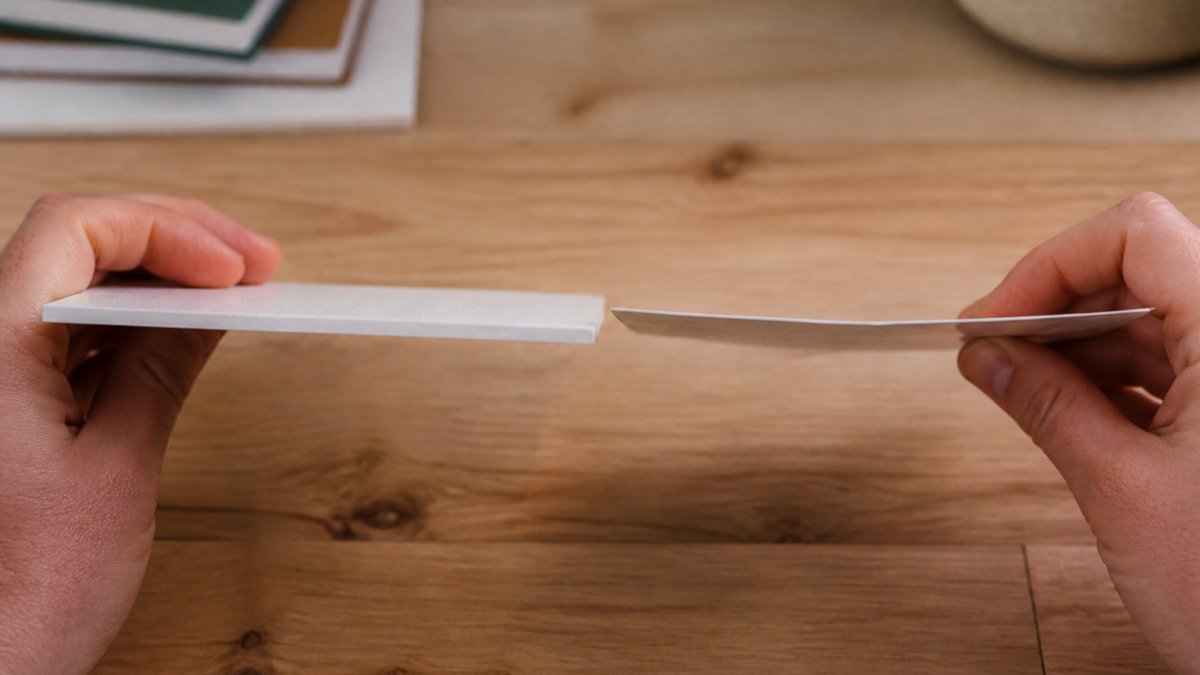
Premium stationery costs more because the price reflects paper stock, print method, design time and production volume, not just the card itself. Greeting cards, calendars and planners can differ in weight and finish, and the gap between a heavier card and a mass-market one is measurable in your hand. A cheap card bends under its own weight.
Here is the honest breakdown. Most of what you pay for in premium stationery is invisible on a shelf, so it helps to see where each pound goes.
The rest of this guide considers whether the premium is worth it for your own use.
Premium Paper Quality: The Measurable Difference in Weight and Finish
Premium paper quality is defined by measurable specifications you can check before buying: weight in gsm, opacity, texture, coating and certification. A heavier matt card feels more rigid than a thin gloss card, which can flex and glare under light. But weight alone does not tell the full story.
What Paper Weight and Finish Tell You Before You Buy
Weight tells you how substantial a card will feel. Lighter stocks tend to flex in the hand, while heavier stocks feel closer to board.
Opacity matters as much as weight. A high-opacity sheet stops show-through, so a design printed on one side does not ghost through to the other.
Texture and coating change how a card feels and how it wears. Matt coatings reduce glare and give photographs a muted, elegant depth; gloss lifts colour but shows fingerprints. Uncoated stocks take handwriting beautifully but are more prone to scuffing. Each option carries a different production cost, and the right choice depends on how the item will be used.
Certification matters too. FSC certified stock means the pulp comes from responsibly managed forests (What is FSC®?).
Stationery Printing Costs: Why Short Runs and Special Finishes Add Up
Protective packaging matters too: a thick card-backed envelope helps protect the print finish in transit.
Design Complexity, Customisation and the Fees Behind a Distinctive Look
Branded stationery for a small business carries the same logic. A consistent look across cards, planners and packaging requires a designer to build a system, not just a single image. That upfront work is what makes the finished item feel distinctive rather than generic, and it is the first thing cut when a product is priced to hit a supermarket shelf.
Cherry Blossom Card, Spring Photo Greeting A6 | FSC Certified 250gsm Matt →
Premium Stationery vs Cheap Stationery: Where the Extra Money Goes
| Cost component | Cheap stationery | Premium stationery |
|---|---|---|
| Paper stock | Lightweight, uncertified | Heavy, FSC certified |
| Print run | Very large, low unit cost | Short, higher unit cost |
| Design | Template or stock image | Original artwork |
| Finish | Basic gloss | Matt, foil or embossed |
| Packaging | Thin sleeve | Card-backed envelope |
| Retail mark-up | Thin margins, high volume | Higher margin, lower volume |
Value Over Time and Cost Per Use
Cost per use changes the maths. A planner that survives a full year of daily handling costs less per week than three cheap ones that fall apart. A card that arrives unbent and gets kept on a mantelpiece delivers more than a card that creases in the post. Durability is part of the price, and it is the part buyers forget to count.
How to Choose Stationery for a Small Business Without Overpaying
Choosing stationery for a small business without overpaying means matching the specification to the job. Not every item needs the heaviest stock or a custom design. Use this checklist before you order:
- Decide which items are client-facing and which are internal
- Ask for the gsm and finish on every quote
- Confirm whether the stock is FSC certified
- Check the minimum order quantity before you fall in love with a design
- Confirm delivery times against your actual deadline
For a deeper walkthrough, our guide on luxury stationery for small businesses covers how to balance specification against budget. If paper weight is where you keep getting caught out, read the paper weight mistakes that ruin print quality before you place an order.
When the Premium Price Is Worth It and When It Is Not
If you are weighing up a purchase and want to ask about pricing or place an order directly, our contact information page puts you in touch with us.
Ordering Premium Cards and Planners That Match Your Standards
Ordering premium cards and planners starts with the specification, then the design, then the deadline. Get those three right and the price makes sense. Get them wrong and you pay premium rates for a product that disappoints.
Our range includes the Cherry Blossom Card, printed on FSC certified 250gsm matt stock in A6, blank inside with a white envelope, and packed in a thick card-backed envelope. The Red Admiral Butterfly card is printed on 250gsm matt card with a white envelope, with second-class UK postage included and a first-class upgrade available at checkout.


If you are not sure which planner suits your year, our guide on how to choose the best planner for annual organisation walks through the decision. When you are ready to browse, you can view all our premium cards and prints in one place.
Frequently Asked Questions
Why does premium stationery cost more than standard stationery?
The price gap comes from four main areas: heavier paper stock, shorter print runs, design work and protective packaging. A heavier card stock is one of the factors that can affect price, as can the card-backed envelopes used for safe delivery. None of these costs disappear when you buy cheaply; they are simply removed from the product.
How do paper weight and finish affect premium paper quality?
Paper weight is measured in gsm (grams per square metre). A 250gsm card feels sturdier than a thinner card. Matt finishes reduce glare, while gloss reflects more light. If a listing does not state the gsm, ask before you buy.
Is premium stationery worth the extra cost for a small business?
It depends on where the stationery is seen. Client-facing items such as branded cards, planners and packaging carry your reputation, so a sturdier stock and cleaner print usually justify the higher unit cost. Internal notes and rough drafts rarely need it. A practical approach is to spend more on the items customers touch and keep everyday supplies cost-effective. Ordering multiple cards in one go also spreads the postage, which lowers the effective cost per item.
How can I tell whether stationery is genuinely worth the price?
Check three things before ordering: the stated paper weight and certification (FSC certified 250gsm is a strong signal), whether the seller prints and packs the items themselves, and what protective packaging is used. Ask about delivery timescales if you have a deadline, and look for real customer reviews rather than generic claims.
The challenge is simple: most stationery buyers cannot tell premium from mass-market until the parcel arrives. Marcus Brown removes that guesswork with superb print quality, items professionally printed on certified stock, fast delivery and global shipping, so what lands on your desk matches what you ordered. Get started with Marcus Brown and order stationery that holds its finish, its shape and its standard.
